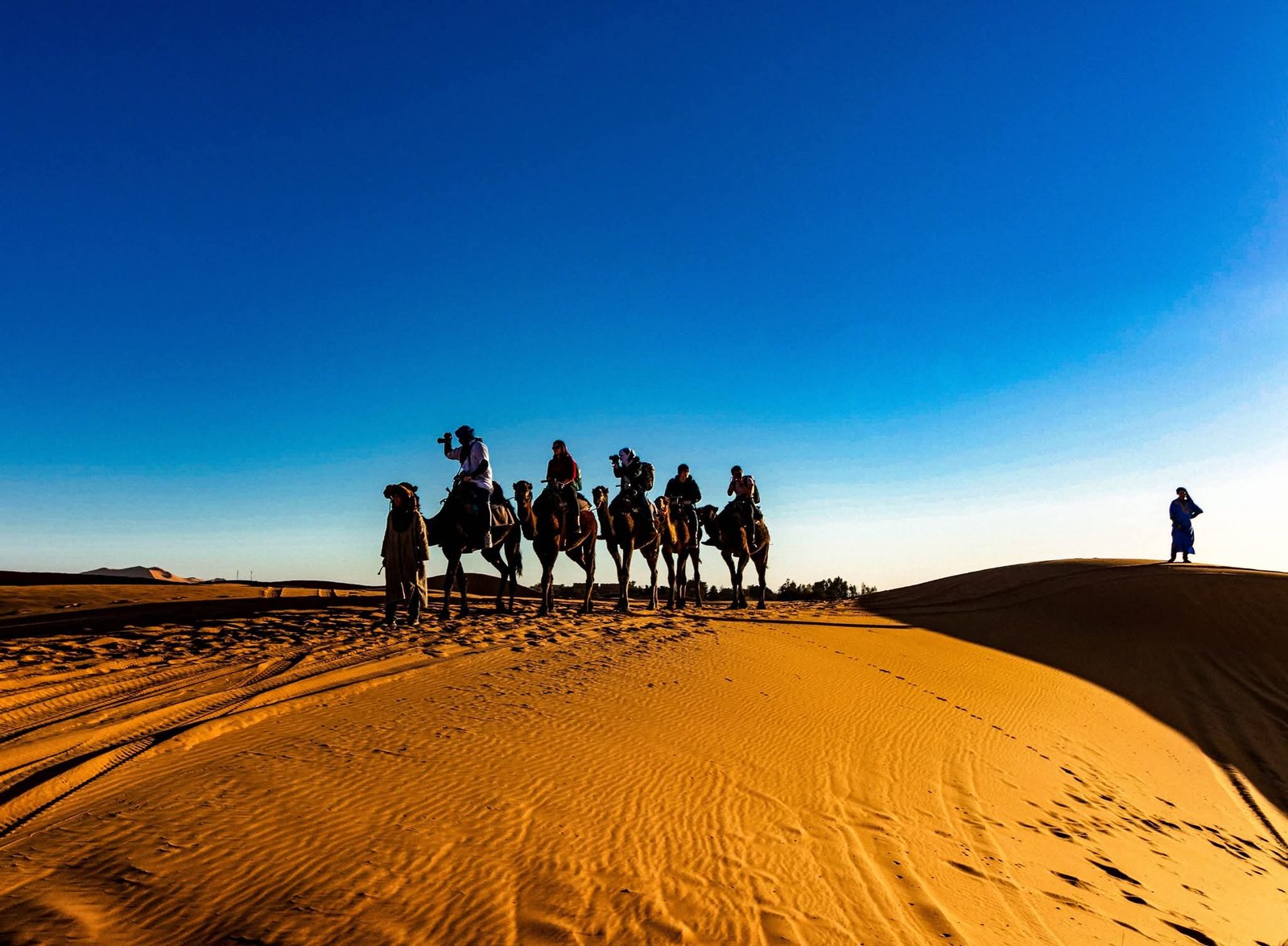
Camel trekking at Erg Chebbi dunes, one of the best Sahara Desert Morocco experiences
The Best Time to Visit the Sahara Desert in Morocco (Weather, Crowds, and Comfort)
When is the best time to visit the Sahara Desert in Morocco without getting roasted by the heat, packed into busy camps, or sandblasted by the wind?
There's no single perfect month for everyone. The ideal time depends on your comfort level, budget, and what you want to experience—whether that's a camel trek, sunrise and sunset photography, or quiet stargazing in the dunes.
This guide focuses on the two main gateways to the Moroccan Sahara:
- Merzouga (Erg Chebbi)
- M'Hamid (Erg Chigaga)
Conditions, access, and the overall "feel" can vary a lot between these areas, so understanding the seasons will help you choose the best time to go.
Quick Answer: Best Time to Visit the Sahara Desert in Morocco
For most travelers, the best time to visit the Sahara Desert in Morocco is from October to April. Days are usually warm enough to enjoy the dunes, while nights are cooler but manageable with the right layers.
If you want the simplest and most reliable choices, aim for:
- October
- November
- March
- April
These months usually offer the best balance of comfortable weather, accessible roads, and a wide range of tour and camp options.
Keep two things in mind:
- Winter nights (December–February) can feel very cold - often dropping to 0-5°C (32-41°F)
- Summer heat (June–August) can be extreme - daytime temperatures often reach 45-50°C (113-122°F), especially for activities on the sand
Best Overall for Comfortable Weather: October to April
"Comfortable" in the Sahara usually means you can:
- Ride a camel without overheating
- Explore the dunes on foot without rushing back to shade
- Sleep at night without wishing you had packed your entire wardrobe
From October to April:
- Daytime temperatures are generally more forgiving (15-25°C / 59-77°F)
- You can walk on the dunes longer and enjoy meals outside
- Early mornings and evenings are pleasant for sunrise, sunset, and photography
Always bring layers, no matter when you travel. Desert temperatures drop quickly after sunset, even after a warm afternoon.
Best Months for Fewer Crowds and Better Prices: Late November & Early March
If you want a quieter desert experience—with fewer people on the dunes and more relaxed camp atmospheres—late November and early March are excellent times to visit the Moroccan Sahara.
During these weeks:
- Weather is generally still comfortable
- Many tours and camps offer more competitive pricing outside peak holidays
- You may find better availability at popular camps without booking months in advance
Month-by-Month Guide: Weather, Crowds, and Overall Feel
Use this section as a realistic "how will it feel?" guide, not a guarantee. The Sahara has moods, and a single windy front can change conditions overnight.
| Month | What it Often Feels Like | Crowd Level |
|---|---|---|
| January | Sunny days, very cold nights | Medium crowds |
| February | Similar to January; dry, crisp, cold at night | Medium crowds |
| March | Warmer days begin, some windy spells | Medium crowds |
| April | Pleasant days, cool nights, very popular | High crowds |
| May | Hotter afternoons; early starts are best | Medium crowds |
| June | Very hot; limited safe daytime dune time | Low crowds |
| July | Extreme heat; comfort depends heavily on your camp | Low crowds |
| August | Extreme heat; nights can still feel warm | Low crowds |
| September | Hot early in the month, more pleasant later | Medium crowds |
| October | Warm days, cool nights, relaxed pace | High crowds |
| November | Great overall balance; cooler evenings | High crowds |
| December | Mild days, cold nights; Christmas and New Year rush | High crowds |
October and November: Ideal for First-Time Visitors
October and November are among the most popular months to visit the Sahara Desert in Morocco—and for good reason.
You can usually:
- Enjoy long, golden sunsets and comfortable camel rides
- Eat dinner outdoors at camp without rushing inside from the cold
- Sleep well with standard bedding and a few extra layers
Skies are often clear, making these months perfect for:
- Sunrise photography
- Sunset shots
- Stargazing over the dunes
Because demand is high, well-reviewed and luxury camps fill quickly. If you want private bathrooms, specific camp styles, or prime dune locations, book as early as you can.
December to February: Clear Skies, Cold Nights
Winter in the Moroccan Sahara can be beautiful. The light feels crisp, and the sky after sunset is often incredibly clear.
The trade-off: nights can be freezing, especially deeper in the dunes.
If you're visiting between December and February:
- Choose camps with warm bedding, thicker tents, and good wind protection
- Pack warm base layers, thick socks for sleeping, and something to cover your ears
- Expect to spend more time around campfires and inside tents at night
Crowds often spike in late December and around New Year's, particularly in Merzouga, when availability can be tight and prices higher.
March & April: Spring Light and Unpredictable Winds
March and April bring back warmth and beautiful light, making this one of the best times for desert photography.
You can expect:
- Warmer days and comfortable temperatures for walking and camel trekking
- Soft, golden light that highlights dune textures and ripples
- A higher chance of windy days, especially in March
Wind matters in the Sahara. It can:
- Blow sand into your eyes, camera, and food
- Make evenings feel colder than the temperature suggests
A light scarf or head wrap and good sunglasses make a bigger difference than most travelers expect.
April is also one of the busiest months of the year, so booking early is wise.
May & September: Hot, but Manageable with a Good Plan
May and September sit on the edges of the most comfortable season. You can absolutely visit the Sahara during these months, but planning is key.
To stay comfortable:
- Schedule dune activities for early morning and late afternoon
- Rest in shade or indoors during the midday heat
- Consider higher-quality or luxury camps for better comfort and cooling
September often starts out feeling like summer, then gradually becomes more pleasant toward the end of the month.
June to August: For Heat-Tolerant Travelers Only
Summer visits to the Sahara (June–August) are possible, but the heat is intense and not suitable for everyone.
During this period:
- Midday temperatures can make long dune activities unsafe or very uncomfortable
- Tours often shorten dune time and focus on sunrise and sunset experiences
- Nights can remain warm, making sleep difficult for some travelers
If you travel in summer, prioritize:
- Camps with good ventilation and higher comfort levels
- Constant hydration and strong sun protection
- Following your guide's safety advice closely
How to Choose the Best Time for You
The calendar is only part of the decision. Your travel style and priorities matter just as much.
Best Time for Camel Trekking and Desert Camps
For most travelers, the best time for camel trekking and overnight desert camps is October to April.
In this period:
- Camel rides are longer and more enjoyable
- Walking on the dunes feels comfortable
- Sitting around the campfire at night actually feels pleasant
Camp comfort matters:
- Standard camps: simpler setups, shared bathrooms, thinner tents
- Luxury camps: real beds, better bedding, private bathrooms, more warmth
In colder months, this difference can determine whether you sleep comfortably or shiver all night.
Best Time for Photography, Sunrise, and Sunset
For photography, fall through spring usually works best.
During these seasons:
- The sun sits lower, creating stronger contrast and shadows
- Dune textures and ripples stand out more clearly
Plan for:
- Sunrise and late-afternoon golden hour
- Early mornings for the softest light
Wind can reshape dunes overnight, so even staying in the same camp can give you a fresh landscape each morning.
Best Time for Stargazing and Milky Way Views
For stargazing, timing is less about the month and more about conditions:
- Clear skies
- Little to no moonlight
Check moon phases and aim for a new moon if stargazing or Milky Way viewing is a priority.
Winter nights often offer exceptionally crisp skies, but warm clothing is essential if you want to stay outside comfortably.
Best Time for Families and Comfort-Focused Travelers
For families and travelers who prioritize comfort, the best months are usually:
- October
- November
- March
- April
These months offer:
- More predictable temperatures
- Easier conditions for children and older travelers
- Greater flexibility for daytime activities
If traveling with kids:
- Keep driving days shorter when possible
- Plan regular rest and bathroom breaks
- Choose camps with private bathrooms and reliable, kid-friendly meals
Small comfort upgrades can make a big difference to how everyone feels.
Merzouga (Erg Chebbi) vs. M'Hamid (Erg Chigaga)
Even in the same season, Merzouga and M'Hamid can feel very different.
Merzouga / Erg Chebbi
- Easier and faster access from Marrakech and Fes
- More developed, with many camps and hotels
- Best for shorter trips and smoother logistics
M'Hamid / Erg Chigaga
- More remote and wild
- Longer drives on rougher routes
- Ideal for travelers seeking solitude, especially in peak months
In colder or windier periods, Erg Chebbi's easier access and wider camp options can be a real advantage.
What to Pack by Season
Some items are useful year-round in the Sahara:
- Scarf or head wrap
- Sunglasses or other eye protection
- Closed-toe shoes
- Lip balm and moisturizer
Add seasonal layers depending on when you travel:
- Fall & Spring: light layers, a warm evening jacket, wind protection
- Winter: warm base layers, a thicker jacket, warm socks, beanie/hat
- Summer: strong sun protection, breathable clothing, extra hydration
How Many Days You Need & When to Book
To truly feel the desert, plan at least two nights in the Sahara region.
- One-night trips often feel rushed
- Two or more nights let you settle into the rhythm of the desert and allow flexibility for weather
Booking tips:
- Reserve early for October, November, April, and holiday periods
- The best camps (and room categories) fill first
- Keep some itinerary flexibility for possible weather changes
Ready to Experience the Sahara Desert Morocco?
Book your perfect Sahara adventure with our local experts. For detailed packing recommendations, see our guide on what to pack for a Sahara Desert Morocco trip.
Contact Us View Desert ToursFrequently Asked Questions
What is the hottest month in the Sahara Desert Morocco?
July and August are the hottest months, with temperatures often exceeding 45°C (113°F) during midday.
Can I visit the Sahara Desert Morocco in December?
Yes, but be prepared for cold nights (often below 5°C/41°F). Choose a camp with proper heating and warm bedding.
Is the Sahara Desert Morocco safe for solo travelers?
Yes, especially when booking with reputable tour operators. Group tours provide added safety and social opportunities.
What should I wear in the Sahara Desert Morocco?
Light, loose clothing for day, warm layers for night, closed-toe shoes, and head protection. Avoid synthetic fabrics that trap heat.
Last updated: January 11, 2026
Conclusion: When Is the Best Time to Visit the Sahara Desert in Morocco?
For most travelers, October to April is the best time to visit the Sahara Desert in Morocco, with October, November, March, and April offering the easiest balance of comfort, activities, and accessibility.
- Winter brings clear skies and very cold nights
- Summer brings extreme heat and limited daytime activities
Choose the timing that fits your travel style, decide between Merzouga and M'Hamid based on how much comfort or remoteness you want, and book a camp that matches your expectations.
Once you're there—properly dressed, well-prepared, and on "desert time"—the dunes take care of the rest, especially when the stars rise over the Moroccan Sahara.

Comments (0)
Leave A Comment